Showing posts with label DC Comics. Show all posts

Thursday, March 7, 2019

The Evolution of Comic Covers

Due to a project that I'm doing for Paul over on Back to the Bins, I've been seeing a lot of comic book covers recently. What has struck me is that we are pretty much back where it began. Let me explain that by using Batman, a character continuously published for 80 years, as an example.


This is a cover from the 1940's. What we have is a "poster" image that may or may not reflect what's inside the book. Other than that, we have the title, publisher logo, issue number, date, and price. Very simple and, except for the Joker's presence, we don't get any information about the story.


This cover comes from the 50's, and now we have the Comic's Code stamp prominently featured. In addition to the information we had in the 40's, we now have a speech bubble indicating that Ace is a new member of the team, so he'll probably feature in the story. We still don't know what that story is, though. (Yes, I chose this cover because Ace is on it.)


Here we are in the 1960's and now, in addition to even more speech bubbles, we have the titles of the two stories inside, one of which is represented on the cover. There's much more information to help the consumer decide whether this is an issue that they may want to pick up. Note how the Comic's Code stamps has shrunken from it's premiere.


Now we've made it to the 70's and the cover is less verbose, with only a few speech balloons and no story title. The image does seem to represent something that happens in the story, so maybe a title isn't necessary. The Comic's Code stamp is even smaller now. We also have the beginnings of a corner box, where the issue number, date, and price are all in one place.


In the 1980's we have the corner box also including the, now even smaller, Comic's Code stamp. No speech bubbles but we do have a story title and the promise of a reveal inside the issue. We also have the addition of the creator names, which is a nice touch.


In the 90's, the pendulum started swinging back. We have no story title or word balloons. Everything else is still present, even though the Comic's Code stamp is even smaller. The image seems to be more poster-like and probably not representing something that actually happens in the issue. We do get the obligatory crossover title, though, something there was a lot of starting in this era.


In the 2000's the Comic's Code stamp has practically shrunk out of existence, but the story title is back. This is definitely a poster image, though. The corner box has also been broken up, with the price moved to the UPC box.


This is a cover from a few years ago. What we have is a "poster" image that may or may not reflect what's inside the book. Other than that, we have the title, publisher logo, issue number, date, and price. Very simple and, except for the the fact that it's part of "Zero Year" in "The New 52" era, we don't get any information about the story. So we're right back where we began in the 40's. No corner box, no Comic's Code stamp, although we do have the creator names added.

It's an interesting cycle to look at, but I think the most balance was struck in the 70's and 80's. You get a good amount of information about what's in the issue, but it doesn't overwhelm the cover itself. Too much or too little on the cover doesn't do the issue any favors, in my opinion.

=========================
Like what I'm doing here on the blog and podcast? Why not check out my Patreon Page to see how you can help me do more? http://www.patreon.com/TheHammerStrikes

Thursday, November 29, 2018

A Tale of Two Sourcebooks

As someone who loves superhero comic books and role-playing games, it's inevitable that I would get into superhero role-playing games. I've played a lot, but the main one I have focused on is the Marvel game put out by TSR. Among the many supplementary materials that TSR made was the "Gamer's Handbook of the Marvel Universe", which contained many of the comic characters that you could use in your games. Here's the entry on Captain America:

This gives you game stats for Cap and his equipment as well as a set of role-playing notes for either the GM or someone who wants to play him and a history for the character. Much of the non-gaming information was taken from the "Official Handbook of the Marvel Universe" entry, seen here (taken from this entry on the "oHOTmu or Not" page from the Fire & Water Network):

Now let's compare this to the Distinguished Competition, the DC role-playing game from Mayfair, which was produced around the same time. Here's the entry for Firestorm (as seen in this post from the "Firestorm Fan" blog):

One thing that I notice right off is the lack of a character picture, so a GM can't hold the entry up and say, "You see this guy coming towards you." There's also no history written down here, but there are role-playing notes and stats. This is by design, as this entry was meant to accompany the Who's Who entry that DC proper put out. Here's what that looks like, from the same blog post:

You can see how the layout matches up great with the Mayfair supplement and is very easy to go from one to the other. The Mayfair way also allows for more information to be put in that relates strictly to the game while letting the Who's Who entry cover everything else.

All that being said, I prefer the TSR/Marvel way of doing things, and that's for one reason. I don't want to have to buy two products. I didn't buy the OHOTMU issues because 1) I had a bunch of comics to refer to, and 2) I had everything I needed in the GHOTMU entries. I also didn't have any issues of Who's Who, also because I had the comics. When I later got some of the Mayfair supplements, I was severely disappointed. Some of these characters I didn't know, so I didn't know their histories or even what some of them looked like. Even some of the ones that I knew had updated looks, such as Firestorm, so I was picturing the wrong thing when reading.

The bottom line here, I think, is simplicity. It's much easier for the user to get one thing, even at the sacrifice of some details, than to have to buy two items and hope you get everything you need.

=========================
Like what I'm doing here on the blog and podcast? Why not check out my Patreon Page to see how you can help me do more? http://www.patreon.com/TheHammerStrikes

Thursday, July 19, 2018

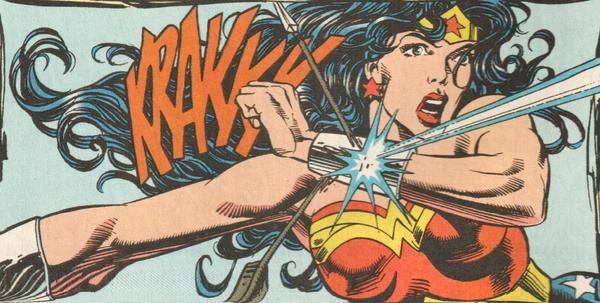
Wonder Woman Is Not Bulletproof


I'm not sure why, but I've been hearing a good amount of questions regarding Wonder Woman and whether she is bulletproof or not. The reasoning goes that she can take a punch almost as well as Superman, so her skin should be tough enough. Well, it's not quite that simple.

Diana is tough, no doubt about it. However, the Goddesses granted her enough resilience to handle her powers, but they didn't make her invulnerable. Think of it this way, a normal human can take a blunt impact, like a punch or even just running into a piece of furniture, and get away with, maybe, a bruise. An arrow, on the other hand, would pierce the skin and cause serious injury.

It's the same way with Wonder Woman. Blunt impacts, or just impacts that can be spread out over an area, will hurt but aren't deadly. Bullets, or anything with a large impact over a small area, will hurt or even kill her. That's why she has to use her super-speed and indestructible bracelets to deflect bullets.

I should point out that my information comes from the Post-Crisis Era of DC, after the George Perez revamp. If you're talking about Post-Flashpoint, then all bets are off as I have no experience with that version of Diana.

=========================
Like what I'm doing here on the blog and podcast? Why not check out my Patreon Page to see how you can help me do more? http://www.patreon.com/TheHammerStrikes

Thursday, October 5, 2017

Superman: The Movie Ending

What's really going on here?
I recently re-watched Superman: The Movie with the commentary track (thanks to the new Superman Movie Minute) and something occurred to me. The premise of the ending is that Superman turned back time in order to save Lois by averting the disasters. We even see the water flowing back, the dam repairing itself, etc.

The problem is, this doesn't work. Jimmy comes up with a line about how Superman dropped him in the middle of the desert during an earthquake. Well, if the disasters didn't happen, Jimmy would still be on top of Hoover Dam. So, what really happened?

Well, what if it was only Superman going back in time? He knows that he can't be in the same place as his other self, or bad things would happen. What he can do, though, is act to lessen the impact of the explosion. He can do more work in the fault, or other underground areas, to bring the earthquake down the Richter Scale, so that the dam doesn't burst and the ground doesn't open under Lois's car.

He couldn't stop the missile from hitting, since that wouldn't give him cause to go back in time in the first place, but he can change the eventual effects. That makes it work with Jimmy's line and it keeps with the powers shown in the comics.

What do you think? Is there another explanation that I'm missing?

=========================
Like what I'm doing here on the blog and podcast? Why not check out my Patreon Page to see how you can help me do more? http://www.patreon.com/TheHammerStrikes

Thursday, August 24, 2017

Stealth Crossovers


Notice something about these two pictures? Yes, the art style isn't the same, but they look like the same character, don't they? The one on the left is Frederick Foswell, obviously from Spider-Man comics, and he appeared in the early run on Amazing. The one on the right is Sam Foswell from the 90's Superman books.

I love when stuff like this happens in comics. To those in the know, it's a great nod to the competition's characters. To the casual reader, it's just another character. This happens more often then the average reader might think, too. If you know where to look, primarily in crowd scenes, you'll be able to see the other company's characters.

For more on Sam Foswell, listen to the From Crisis to Crisis episodes covering the early 90's. For more on Fredrick Foswell, check out Amazing Spider-Man Classics.

=========================
Like what I'm doing here on the blog and podcast? Why not check out my Patreon Page to see how you can help me do more? http://www.patreon.com/TheHammerStrikes

Thursday, June 1, 2017

Why The Quantum Bands Are Better

Image courtesy of Hero Machine
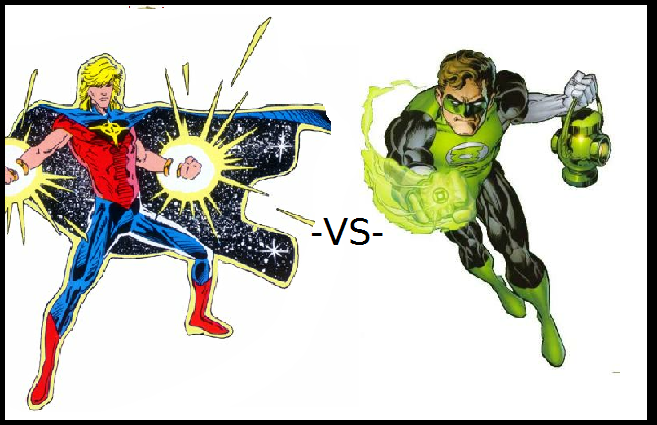
Those of you that know me are aware that one of my favorite comic book characters is Quasar, Marvel's Protector of the Universe. Quasar has often been compared to Green Lantern in that he has jewelry that makes whatever he can think of. That's part of it, but not the whole story. I'm here to tell you why, in the grand scheme of things, the Quantum Bands are superior to Green Lantern's Power Ring.*

Let's look at them side by side. **


Allows User to fly?                                                                         Yes                                                               Yes

Allows User to Survive in Space?                                                   Yes                                                               Yes

Allows User to Warp Jump?                                                            Yes                                                               Yes

Gives User Superhuman Strength?                                                  Yes                                                               Yes

Protection of User (via Force Field, etc)?                                        Yes                                                              Yes

Allows User to Phase through Walls?                                             No                                                                Yes

Can it Render the User Invisible?                                                    No                                                               Yes

Can Create "Solid Light" Objects?                                                  Yes                                                               Yes

Do Constructs Require Concentration?                                            Yes                                                              Yes

What happens when Concentration Stops?                 It remains until the user dissolves it                         It goes away

Needs to be recharged?                                            No (Connected to The Quantum Zone)                    Yes (every 24 hours)

Can Absorb/Control Energy?                                      Yes (after analysis of the energy)                      Absorb but not Control

Allows User to Travel through Time?                                               No                                                               Yes

Can Scan the Electro-Magnetic Spectrum?                                       Yes                                                               Yes

Acts as a Galactic Encyclopedia?                                        Yes (via Eon or Epoch)                                             Yes

Can Act as a Universal Translator?                                                   Yes                                                               Yes

Can be Programmed for Various Situations?                                     Yes                                                               Yes

Weaknesses?                                                                                    Magic                                                   The Color Yellow
                                                                                             Extradimensional Energy                                 Red Power Rings
                                                                                                    Kinetic Energy                                  Mental Instability of User
                                                                                                    Psionic Energy                                    Vibrational Interference

I think that it's pretty clear that in everything that matters, the Quantum Bands are the better weapon. No, you can't time travel with them (but, as Barry Allen has proven, you shouldn't anyway) or phase through walls, but they're good against all the colors of the rainbow. Plus in a straight-up fight, the Quantum Energy is Yellow, which means the GL ring can't do anything against it.

* Part of this topic was discussed on the most recent episode of The Quantum Cast.

** Information provided by The Quantum Zone and the DC Wikia
=========================
Like what I'm doing here on the blog and podcast? Why not check out my Patreon Page to see how you can help me do more? http://www.patreon.com/TheHammerStrikes

Thursday, May 25, 2017

Blank Backgrounds

The Incredible Hulk #289
I might be showing my age, but I remember a time when there were several panels in comics that had "blank" backgrounds (see above). I have no problem with something like this, where the characters are in a battle. I think it adds more focus to the action and keeps the page from getting over-detailed.

That's not to say that doing away with backgrounds, or just drawing the most basic of backgrounds, is an okay thing to do in most cases. I like to see Kirby Tech as much as the next guy, but I think I prefer this kind of simplified approach when it comes to fight scenes. Unless, of course, the background plays a part. Such as the Hulk picking up a big piece of the aforementioned tech to smash down on the Abomination. That kind of thing always trumps on style.


=========================
Like what I'm doing here on the blog and podcast? Why not check out my Patreon Page to see how you can help me do more? http://www.patreon.com/TheHammerStrikes
Thursday, March 16, 2017

Starting a New Collection


A few months ago, I decided that if I want to collect something other that Quasar appearances, then I could do worse than get every issue that was cover dated for the month that I was born. That would be December 1975, for those keeping score. I haven't started on this yet, but if I come across any in my travels I might just start out.

What kind of odd comic collections to you have? I know Scott Gardner has his Disney Parks collections (parks appearing in comic issues and issues featured in WDW itself), but does anyone else have something like that?

=========================
Like what I'm doing here on the blog and podcast? Why not check out my Patreon Page to see how you can help me do more? http://www.patreon.com/TheHammerStrikes

Thursday, March 2, 2017

Organizing Comics

One of my "hodgepodge" boxes
Not so recently, Alan and Emily Middleton went through how they organize their comic book collection on an episode of Shortbox Showcase. That seems to have touched off quite a bit of responses from their listeners on how each individual does it. Well, this is yet another bandwagon that I'm going to jump on, though I may have still a different take.

You see, I don't have a lot of comics any more. In fact, I only have three long boxes and three short boxes. That's it. Most "new" comics that I read now are digital, which means that I don't need to store or organize them. I don't have a lot of boxes, but I figured that I would go through a couple and show you how they're put together.

I tend to go by character, which makes it easier to find things, and then by chronology. Let's take one of my short boxes for example. This one is for Quasar. It contains his series as well as other appearances that I have for him, going from oldest to newest. That means that issues of Avengers that happen between issues of his series are placed in between those issues in the order.

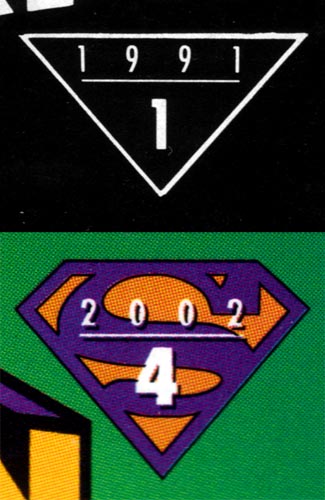
Next we have a Superman long box. This is all Post-Crisis stuff, starting from Man of Steel #1 and moving forward. Many of the issues that I had were damaged in a flood caused by a little storm called Sandy, and had to be trashed. What I have left is placed in order of story, so you have Adventures, Action, & Superman all mixed in. The Triangle Numbering made it easier, but I went and did that to the rest of the titles as well. I also have any "Year One" or similar type issues placed in chronological order as to when they take place. There's even an issue of Wonder Woman in there, which sets up her Action Comics appearance. As this long box isn't full of Superman, I also have related titles, like Superman/Batman in the back.

I do have some boxes that are a mix of things (see the Batman Beyond/Batman/Nightwing/Titans/Outsiders/Aquaman box above). One long box has PvP, Liberty Meadows, Strangers in Paradise (Michelle's), and Concrete, among other things, in it. They needed to go somewhere, so that's where they ended up.

I think that about covers it, and I would like to apologize to the librarians in the audience for making their heads explode.

=========================
Like what I'm doing here on the blog and podcast? Why not check out my Patreon Page to see how you can help me do more? http://www.patreon.com/TheHammerStrikes

Thursday, November 3, 2016

Current Projects


I tend to have a good number of irons in the fire with regard to what I'm doing for entertainment. Having recently finished off listing to The Marvel Superheroes Podcast, and reading the first 250 Marvel Age comics (as listed by The Complete Marvel Reading Order and using Marvel Unlimited), I figured that I'd switch gears a bit.


Inspired by Kyle Benning, Christopher Warden, and Van Zee on Facebook, I'm going to be re-listening to all of the Tales of the Justice Society of America episodes. As part of that, I'm also going to start a read through of All-Star Squadron. Of course, that's not enough for my multi-tasking mind to go with, so I'm also going to be listening to The Amazing Spider-Man Classics podcast for the first time, now that it's been revived. I'm also going to start a re-read of the 1984 Star Trek comic series from DC, for a reason to be announced.

As a family, though, we are currently watching the original Star Trek episodes on the 50th anniversary of their original airing. I've seen them all, multiple times, but Michelle has only seen the occasional one, and Kira normally walks out of the room when Trek is on. Now, though, we're all watching them as intended, once a week, as a group. Some interesting things are showing up, mainly with Kirk NOT being a womanizer in the early episodes, and with some of the discussions we have during & after the shows.

I have no idea when these projects will be completed, or if I'll see something shiny before they are, but I figured that I'd share them in case anyone wants to join me on this journey.

=========================
Like what I'm doing here on the blog and podcast? Why not check out my Patreon Page to see how you can help me do more? http://www.patreon.com/TheHammerStrikes

Thursday, September 29, 2016

The Silent Knight

One of the "lost" characters from DC Comics is The Silent Knight. One of the three characters to kick of the "Brave and the Bold" comic back in 1955, he lasted until Issue #22. He reappeared in the 80's, brought back by Roy Thomas during a "Crisis On Infinite Earths" crossover in All-Star Squadron #54 & 55, along with his costars Golden Gladiator & Viking Prince. He has since by retconned to be an incarnation of Hawkman and an ancestor of Jonathan Kent, neither of which I'm thrilled with.

What I like about this character is that he works both with superhero and Arthurian tropes. Brian is the son of a Lord, Sir Edwin, who shares power with Sir Oswald. Oswald kills Edwin in the first story and Sir Grot, an aged knight, is charged with training Brian. Knowing that Brian will be killed if he's perceived as a threat, Grot makes sure to demean the lad in front of Sir Oswald.

One day, Brian finds a suit of armor in the Forest Perilous, a place known for being enchanted, and puts it on. He's soon fighting off bandits to save Lady Celia, who knows Brian. Fearing that he might be recognized by his voice, Brian doesn't speak and is thus dubbed The Silent Knight.

Brian hides the armor in the forest, where he goes to retrieve it when he needs to. He maintains his secret, even though Lady Celia drops hints that she knows, even going so far as to protect Brian's identity at least twice. Sir Oswald seems to suspect Brian every now and then, but is always thwarted in his attempts to find out the true identity of his nemesis. Later stories move away from Sir Oswald and focus more on the Knights of the Round Table, culminating in The Silent Knight being proclaimed the greatest knight in the land.

I've read all of the Brave and the Bold appearances, as well as his guest spot in All-Star Squadron, and I have to say, I really like this character. The stories are straight forward and well done, working well in the anthology title. If you can find them, I'd recommend picking up these issues.

If you want to hear me talk more about this character, I was on Ryan Daly's Secret Origins Podcast to talk about his appearance in Issue 49.

=========================
Like what I'm doing here on the blog and podcast? Why not check out my Patreon Page to see how you can help me do more? http://www.patreon.com/TheHammerStrikes
Thursday, August 25, 2016

My Top 10 Superhero Movies

Recently, a friend asked me what my top ten comic book movies were. I looked at this as a mental exercise, because my typical answer is "it depends on my mood". This time, though, I set out some criteria for my choices.

  1. The character(s) had to originate in comic books or comic strips. So, characters like Zorro (books), The Lone Ranger (radio), or the crew of the Enterprise (TV) aren’t allowed.
  2. Comic book adaptions of movies (i.e. Star Wars) don’t count, even if they came out before the movie itself.
  3. Theatrical releases only, no TV movies.

So, with all of that in mind, here's my list.

10. Batman (Warner Brothers, 1989)

One of the first times I saw a "serious" Batman on the screen was when my friends and I went to the two screen movie theater in town and waited in line for THE EVENT of the summer of 1989. I remember being one of the people that wasn't all that convinced that Michael Keaton could pull off a serious role, but I was wrong. This is still one of the great examples of a non-origin movie, even if they had to link the Joker & Batman.


9. Guardians of the Galaxy (Marvel Studios, 2014)

This is one our whole family enjoyed when we saw it. Kira loved the visuals, and the talking raccoon. Michelle loved the story and characters. I was just reveling in the "comic-ness" of the whole thing. I mean, there was a scene with a Celestial for crying out loud! Plus, this was just a fun movie that didn't take itself too seriously.


8. Iron Man (Marvel Studios, 2008)

You want an example of how to turn a comic origin into a movie? Here you go. Updated for the more modern day technology (no, transistors didn't do everything) and a location change, but pretty much everything from the Tales of Suspense issue is here. Plus, Robert Downey, Jr. did an amazing job which has, fortunately or unfortunately, informed the character since.


7. Batman (20th Century Fox, 1966)

Yes, I rank Adam West & Caesar Romero higher than Michael Keaton and Jack Nicholson, and that for the simple reason that we have the Silver Age Batman characters on screen in a hugely fun romp. I love the original Batman TV Series in all it's tongue-in-cheek glory, and this movie is that ramped up to 11. We recently rewatched this for it's 50th Anniversary and I'm happy to say that it's still one of the most enjoyable movies I've seen, right down to the Bat Anti-Shark Spray.


6. Thor (Marvel Studios, 2011)

Marvel puts out, essentially, a movie about Walt Simonson's Thor directed by one of the best Shakespearean actors/directors of the modern age and you can be assured that it will be on my top 10 list. This was the perfect way to approach the idea of a god as a superhero, and bringing the whole humility thing in without resorting to Donald Blake just gets bonus points.


5. The Phantom (Paramount Pictures, 1996)

Look at Billy Zane in this movie and you'll see someone who's just having a blast in the role. Prior to this movie my entire experience with The Phantom was on "Defenders of the Earth", which isn't exactly the best introduction. This film, barring the stupid "Slam Evil" tag, is just great stuff. Keeping Kit Walker in the 30's/40's is probably the best way to handle it. Heck, I'd love to see The Ghost Who Walks run across Indiana Jones. The Nazis wouldn't stand a chance.


4. The Incredible Hulk (Marvel Studios, 2008)

I have no problem with Mark Ruffalo as Bruce Banner. In fact, I like what he's done with the role very much. Ed Norton, though, was a great amalgam of the comic book & TV Banner and I will always prefer him in the role. The nods to every version of the Hulk in this movie are terrific, as is the story. Banner's still on the run and trying to find a cure, & in trying to combat him General Ross unleashes an even worse monster. Great stuff!


3. Batman: Mask of the Phantasm (Warner Brothers, 1993)

The single best interpretation of Batman, in my opinion, is Batman: The Animated Series. Bring all of that to the big screen, with a take-off on Batman: Year Two, and you have my attention. Kevin Conroy & Mark Hamill will for all time be the voices that I hear when reading Batman & The Joker, and they are at their absolute best in this movie. Add a possibility of Bruce Wayne NOT becoming Batman, and you have one heck of a film.


2. Superman: The Movie (Warner Brothers, 1978)

You look at this picture and just hear the John Williams score, don't you? There's no doubt about it, Christopher Reeve was the absolute BEST at portraying both Clark Kent and Superman. His earnestness just sells it to the point that you do believe that a man can fly. This isn't a perfect movie, between the "can you read my mind" stuff and the flying back through time deus ex machina, but it's still one of the best out there.


1. Captain America – The First Avenger (Marvel Studios, 2011)

I put Christopher Reeve & Chris Evans in the same club, because Superman & Captain America are in the same club. These are the men who do the right thing, no matter how hard it is or how much they have to sacrifice. I whole-heartedly believe Evans as Steve Rogers, a man who doesn't want to kill but to protect. This is Captain America, the hero that everyone in the world, American or not, can look up to and admire.


What do you think, dear reader? With the criteria above, are there any that I should have had on here? Should Flash Gordon have replaced the 1966 Batman? Should Iron Man 2 be on here in place of something? Let me know your opinion.

=========================
Like what I'm doing here on the blog and podcast? Why not check out my Patreon Page to see how you can help me do more? http://www.patreon.com/TheHammerStrikes

Thursday, July 21, 2016

Nightwing

Inspired by a recent episode of Trentus Magnus Punches Reality, I have dug out my old Nightwing comics and have started a reread. While I by no means have a complete run, I have a rather large chunk, especially of the Dixon/McDaniel/Story team. Doing this has reminded me just why Nightwing is my favorite member of the Bat-Family.

That's right. Not Batman. Not Robin. Not even Dick Grayson as Robin. No, my favorite member of the Bat-Family is Nightwing. Specifically the Nighwing as written by Chuck Dixon and illustrated by Scott McDaniel & Karl Story.

That I like the character under the pen of Dixon is a no-brainer. He's one of the writers that "gets" these characters and it's a joy to read any of his work. Having Dick go to another city, where he doesn't have the Gotham support systems, is wonderful. Not only that, we get some great supporting characters and Dick is able to finally find his own way.

What doesn't jive is that I like the art so much. Those that know me understand that I don't like impressionistic or "wonky" art. Not suprising when my first ever comic was drawn by Sal Buscema, a master. Even Walt Simonson's art, which is a bit more stylized, still is workable.

McDaniel's art, however, with it's odd sight lines and movable anatomy, doesn't fit into my normal box. However, it just WORKS for Nightwing. It kind of works for Robin, and I don't think it works for Batman or Superman at all, but it's just a perfect fit for Nightwing. The Flash/Spider-Man multiple images is terrific (see the image on this post) and allows you to see the grace at which Dick moves through his city. It's just some great stuff.

So the writing and art on this series is great, but why Nightwing? Well, that's pretty simple. Here you have one of the 2nd generation heroes who has grown into his own man. Unlike Wally West, who is my favorite Flash, Dick didn't take over for his mentor. He stopped being Robin and, after a bit of a search, found his own path. He's obviously inspired by Batman still, but also by all the other heroes who he's worked with. Nightwing isn't Batman 2.0, and he isn't Robin in long pants, he's his own hero who's grown into this role. That, and his ability to still smile & joke, is why I like Nightwing the best.

=========================
Like what I'm doing here on the blog and podcast? Why not check out my Patreon Page to see how you can help me do more? http://www.patreon.com/TheHammerStrikes

Thursday, July 14, 2016

My Batman Wears Blue and Gray

From Batman-Online
Whether you're talking about Neil Adams, Jim Aparo, Adam West, or Olan Soule, the Batman that I grew up with wore blue & gray. I'm not going to get into the whole "he was originally intended to be in all black" or "blue can look darker than black at night" arguments. Nope, I just wanted to state that when someone says "Batman" to me, this is the costume that I picture.

Is it realistic? Not in the slightest, but, then, neither is Batman as a concept. The idea that a grown man, dressed as a bat, would go out and fight crime while not being killed isn't realistic at all. However, I've written about that before, so I won't get into it again.

This is a Batman who is The Dark Knight Detective. He's not the world's greatest fighter, but he can hold his own. He doesn't have a plan for everything, and has been tricked and beaten before. However, he never gives up and will eventually triumph through his keen mind and relentless will. This is a Batman who is not afraid to smile or crack a joke, but can be deadly serious when the occasion warrants it.

Your favorite Batman may be different, and that's great, but this is mine.


=========================
Like what I'm doing here on the blog and podcast? Why not check out my Patreon Page to see how you can help me do more? http://www.patreon.com/TheHammerStrikes

Thursday, June 30, 2016

Buy-In Characters

From http://talesofadequacy.wordpress.com/
There is something to be said for having a "buy-in character" for various groups in works of entertainment. Those characters that an audience member can see a little bit of themselves in. One type of these characters that I never really liked was the kind that was only there for kids. More often than not, these characters were either useless or annoying. Sometimes both at once.

Some examples I can think of would be Wendy, Marvin, & Wonder Dog on the original Super Friends. These "Junior Super Friends" were there simply to give kids a reason to watch the show.

I'll let that sink in for a moment.

Yes, Hanna-Barbera Productions thought that a cartoon about Superman, Batman & Robin, Wonder Woman, and Aquaman wouldn't have kids watching it. Ugh.

Another type of character was the "Hey kids! Watch this! We've got a kid on here who's super smart!" character. I'm talking about the Wesley Crusher/Lucas Wolenczak character. You know, the kid who's smarter than the adults. The one who can figure out the solution to the problem quicker and better than the highly trained officers. Yeah, that's something I have no time for.

Don't get me wrong, Wil Wheaton & Jonathan Brandis did a great job with what they were given, I just don't think those are the right kinds of characters to have on shows. I would much rather have watched Star Trek or SeaQuest without those characters on them, or have them there but just as regular kids their age. The Super Genius (TM Wild E. Coyote) bit is what made me not like them, and their over use as the Deus Ex Machina made me dread episodes that featured those characters.

Personally, I would much rather all characters be there for a story purpose, and not to attract a certain type of viewer. Series like Firefly had a great range of characters and not a kid among them. Not to mention the original Star Trek, where kids were guest stars but not regulars. I'm pretty sure the show was fine in the under 18 demographic, even with that "lack" of someone the kids could identify with.


=========================
Like what I'm doing here on the blog and podcast? Why not check out my Patreon Page to see how you can help me do more? http://www.patreon.com/TheHammerStrikes

Thursday, June 23, 2016

Superman on Supergirl


As I'm sure you're all aware, they are going to put Superman on screen in the new season of Supergirl, and not back-lit or blurry, either. As a Superman Fan, I can tell you that I'm thrilled about this. I do have a few things to say, though.

First, I'm happy to see a new actor take on the role. Of those that have played the Man of Steel, and are still with us, we have Brandon Routh & Henry Cavill, both of whom already have roles in DC properties, so they were out already. That leaves Tom Welling, the man from the Smallville TV series. Since he spent 10 years of his life as Clark Kent already, I don't think he would have come back anyway.

However, they have cast Tyler Hoechlin in the role, who is 28 as of this writing. That's a bit of a problem for me. You see, Superman was already around, and trusted, when Kara first arrived on Earth. That means he had to be around 22 years old, at the youngest. Now it's 12 or so years later, which means that he'd be in his mid-30's, at least. We also have James Olsen. Actor Mehcad Brooks is 35 at the time of this writing, which means that we have a Jimmy Olsen who is older than Clark Kent!

Last, and certainly not least, I want the writers to remember that the show's name is "Supergirl" and not have Superman around to save the day all the time. I liked how they handled it in the first season, making it all about Kara with Clark in the background, if he was there at all. That should continue, but I'd love to see some Kryptonian family bonding going on at the Fortress.


=========================
Like what I'm doing here on the blog and podcast? Why not check out my Patreon Page to see how you can help me do more? http://www.patreon.com/TheHammerStrikes
Thursday, June 9, 2016

Do Superheroes Need Secret Identities?

One of the choices that you had in the Marvel Superheroes Role-Playing Game was whether or not to make your hero's identity Public or Private. Because we all read comics growing up, we pretty much always chose Private. Yeah, you got a bit of a penalty (nothing like if you were a mutant) but all superheroes need a secret identity, right?

Turns out, not so much. Oh, there's no way that Superman, Batman, or Spider-Man could operate without Clark Kent, Bruce Wayne, or Peter Parker, but there are some heroes where it's just not necessary. Heck, some of the most boring Captain America stories were the ones where Steve Rogers was trying to make a living as an artist. It's great that he's got a hobby, but why does Captain America, a man from another time, need to try and pretend to be someone else?

Adam Worth and I have been complaining over on The Quantum Cast that Quasar's Wendell Vaughn identity is only adding stress to his life (since he's gone for months with getting A SINGLE CLIENT for his security firm) while trying to be the Protector of the Universe. In fact, it would probably be better all around, since he spent several years off planet anyway, to just drop the pretense and live at Avengers Mansion.

This isn't to say that the hero in question should pull a TV Flash, unmasking & introducing himself to every Tom, Dick, & Harry, but just don't worry about setting up a false life. Heck, with the state of the paparazzi today, it would certainly be easier to not have to worry about who was taking of picture of you and when.

What this all boils down to is that it's really a case by case thing. There was a time when you HAD to have a secret identity to be a superhero, but that gave us Don Blake, so it's obviously a flawed premise.


=========================
Like what I'm doing here on the blog and podcast? Why not check out my Patreon Page to see how you can help me do more? http://www.patreon.com/TheHammerStrikes

Thursday, May 26, 2016

Is Superman Responsible for the State of Comics Today?

Image courtesy of GreatKrypton.com
Yes, I know that title will probably get me in trouble, but let me explain myself. When I was reading Superman comics, it was during the "Triangle Era". This was a decade where each of the Superman titles had the year and a number on their cover, which told you what order to read them in. Each book had it's own creative team and storylines, but the subplots tended to bleed over between them. Also, events in one book would impact the other books.

This led to what has been refereed to as "The Never-Ending Battle" form of storytelling, where issues went (usually) seamlessly into each other. You didn't have to buy each title, since you could follow along in one title and still get a satisfying story, but you have a much wider world open-up to you if you read them all.

Now, on to my theory. Many comics in the 90's tried this kind of thing, but it didn't work out as well. The Batman titles did something along these lines, but usually only for a single storyline that would crossover to everything. The same can be said of the Spider-Man books. No one really reached the pinnacle of those Superman books, though. However, if you look at comics of today, especially DC, it seems like you HAVE to read every title or you don't understand what's going on. I understand wanting to have everything happening impact each title. Heck, I loved that kind of thing in 80's Marvel titles, but those were just passing mentions, not key points of the story.

I think that the people writing comics today probably saw the greatness that was the Triangle Era and thought "What if we did that with EVERYTHING in our line?" Unfortunately, you need a really strong hand at the editing wheel and a lot of coordination between the teams to make it work, and I just don't see that in today's comics. The Superman teams had "Super Summits" about twice a year to work out where things were going and who wanted to do what. Not too hard to do over 3-4 titles, but over an entire line that gets unwieldy.

=========================
Like what I'm doing here on the blog and podcast? Why not check out my Patreon Page to see how you can help me do more? http://www.patreon.com/TheHammerStrikes

Thursday, May 5, 2016

The High-School-Ization of Fandom

Well, not so much of a rant, as a "Get Off My Lawn"
In the show that came out this past Tuesday, Trentus Magnus & Michael Bailey were talking, in part, about the High-School-Ization of Fandom. What Magnus said was that High School was the last time you were expected to be good at everything (ie all of your classes) and that fandom had become where you now must like every aspect of geekdom, be it movies, TV, the original comics, etc, or you can't call yourself a fan.

While that's a perfectly valid way to look at it, I have a different take on that phrase. Something I've noticed a lot more in the age of "internet anonymity" is more of the clique mindset, as many have seen in High School. What I mean by that is the "I think this is the best <insert medium> representation of <insert character> and if you don't agree, then you aren't really a fan of him/her!" attitude.

I might be odd (OK, I know I am, but stay with me) but I'm able to compartmentalize things. For example, where Superman in concerned, I can see the George Reeves version, the Christopher Reeve version, Tom Welling version, and the Henry Cavill version all* as valid ways to go with the character. I obviously like some more than others, but that's my prerogative. On top of that, I don't think any of them have to match 1:1 to the comics version, or any of the various carton versions.

Do I think someone that who likes Tom Welling but doesn't like Christopher Reeve is an idiot and "not a real fan"? Heck, no! It means that they're an individual and I respect their opinion. It affects me not at all, so there's no reason to get upset by it. If you're stuck in the High School mentality, though, where popularity is based on your public persona, and how much that matches the "cool" group, then you might just fall into the group think and start blasting people that dare to have their own tastes.

To those people, the one's that think their opinion is the only right and valid one, I say ... well, this is a family blog, so I can't really say it, but I think you get my meaning.

BTW, here's the link for the episode in question. Worth a listen, in my opinion.

* I didn't include Brandon Routh in the list because he's, essentially, playing the Christopher Reeve version and not his own.

=========================
Like what I'm doing here on the blog and podcast? Why not check out my Patreon Page to see how you can help me do more? http://www.patreon.com/TheHammerStrikes